When the leverage worth is greater, the corporate relies extra on debt than on fairness. As a end result, the curiosity expenses of an organization improve, negatively affecting its finances. Nevertheless, the value also wants to not be too low as it might imply the company’s reliability on fairness for elevating funds.
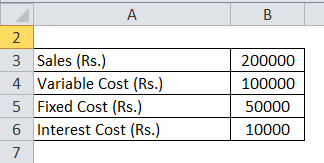
In eventualities the place equity is extra, the impact is adverse on the earnings per share (EPS). The concept helps companies to have funds to broaden their venture and put efforts into earning more than their price of borrowing. In addition, monetary leverage additionally permits investors to have room for more returns on investment, which is the quantity lent to businesses.
Tips On How To Construct Smart Investment Methods
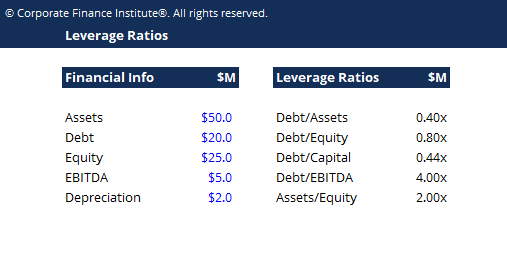
One more ratio on the record is the asset-to-equity ratio, where complete belongings are divided by complete equity. As defined above, monetary leverage means the proportion of loans or money owed within the complete capital of a enterprise. A excessive degree of monetary leverage signifies that a business depends more on loans to finance its operations as in comparability with the owner’s fairness. This can enhance return on fairness (ROE) and earnings per share (EPS) provided that the earnings of the business are greater than the curiosity on loans. A type of financial leverage ratio that compares the entire quantity of a company’s debt to the total capital employed is named the debt-to-capital ratio. This ratio tells us in regards to the company’s capital construction and the portion of financing that immediately comes from debt.
This is not inherently dangerous but the firm may need larger threat due to inflexible debt obligations. The company should be compared to related companies in the identical trade or by way of its historical financials to determine if it has a great leverage ratio. The leverage ratio is used to evaluate the capital construction of a company. This capital construction exhibits the whole portion of debt and fairness that is used for financing the enterprise.
Debt-to-capitalisation Ratio
Leverage ratios are derived depending on the capability of businesses to utilize their financial obligations to multiply their returns. Therefore, the kinds of leverage ratios belong to the working, financial, and mixed leverage labels. Working leverage refers again to the capability of an organization to use monetary obligations or expenditures involving fastened costs for higher returns.
Managing leverage isn’t about shunning debt but about wielding it with precision and foresight. It’s about making informed decisions that align debt with the company’s financial strategy and market position. The ultimate aim is to strike a balance that maximizes returns whereas minimizing threat, ensuring the long-term sustainability and success of the enterprise. Understanding leverage ratio thresholds and how they apply throughout different industries is crucial for making informed financial choices, whether one is a lender, investor, or company manager. It Is a fragile steadiness between threat and reward, and these requirements help navigate the complex landscape of financial leverage.
For example, a capital-intensive utility firm would possibly carry extra debt by design, whereas a SaaS startup might keep lean and equity-funded for years. In the same time horizon, the online debt variation falls from 3.0x to 1.0x, with the whole accumulation of cash being probably the most significant contributor. The senior leverage variation can be lowered by half from 3.0x to 1.5x—which is brought on by the elevated discretionary paydown of the debt principal (i.e. –$10m every year). Now, we have all the required inputs for our model to calculate three necessary ratios utilizing the next formulation. Conversely, within the “Downside Case, the company’s revenue is growing at a unfavorable rate with decrease margins, which causes the money steadiness of the corporate to say no. Extreme reliance on debt financing might result in a potential default and eventual bankruptcy within the worst-case scenario.
Leverage ratios are necessary instruments for measuring a company’s financial health and threat. Knowing when and tips on how to wield these calculations can lead to priceless investor insights, however they’re just a starting point for understanding what’s going on inside a company and what’s driving the numbers. For instance, a company that grew earnings before curiosity and taxes by 20 percent on a ten p.c improve in sales would have working leverage of 2 instances.
- EBITDA is essentially the most widely used proxy for working money circulate despite its shortcomings, such as ignoring the full money impression of capital expenditures (CapEx).
- Companies in cyclical industries, for instance, ought to have ample interest protection to be able to stand up to downturns.
- Monetary leverage ratios are used to judge a company’s creditworthiness, assess monetary risk and determine how a lot of its operations are financed by way of debt.
- The higher the monetary leverage, the more obligations it has to pay back.
- Products and services referenced are provided and bought solely by appropriately appointed and licensed entities and monetary advisors and professionals.
The interpretation of 5 occasions is that the interest expense can be paid 5 occasions out of the earnings before https://www.simple-accounting.org/ curiosity and tax. A greater interest cowl ratio means that the interest expense may be paid more simply. The curiosity cowl ratio exhibits the variety of instances interest bills could probably be paid out of EBIT. Now let’s use the above talked about instance of the automobile manufacturing company to calculate the debt-to-equity ratio.
A higher leverage ratio indicates more debt relative to fairness, which can signal higher financial threat if the company’s income doesn’t sufficiently cover its debt obligations. Conversely, a decrease leverage ratio suggests a extra conservative strategy to financing, with less reliance on debt. Nevertheless, the interpretation of these ratios isn’t black and white; they should be thought-about in the context of the industry, economic situations, and the corporate’s particular state of affairs. A kind of monetary leverage ratio that measures the proportion of a company’s complete belongings which might be financed by debt is known as the debt-to-assets ratio. This ratio supplies information about a company’s financial construction and its dependence on debt financing. On the other hand, financial leverage is related to using debt to finance a company’s investments.